

 Nicole Kupchik
NEWS FLASH! The American Heart Association has updated their AHA 2025 CPR and ECC Guidelines and I want to share the updates here. Big picture, most of their recommendations are the same, but I am calling attention to some of the changes here.
1. For BLS
- There is a focus on starting CPR if abnormal breathing is present and no pulse is present. Think gasping or agonal breathing.
- Give rescue breaths if abnormal breathing is present and pulse IS present. Give naloxone if suspected opioid overdose.
2. LVAD Algorithm
- States only to do CPR in a patient with an LVAD that does not have adequate perfusion.
- Adequate perfusion is
- Normal skin color and temperature
- Normal cap refill
- MAP > 50 mm Hg
- PEtCO2 > 20 mm Hg
- These patients may not have a palpable pulse. You can use a doppler or an arterial line if the noninvasive BP cuff isn’t picking anything up.
3. Foreign body obstruction
- The use of 5 back blows is the initial step before 5 abdominal thrusts.
What’s old is new again! A lot of you may know I choked and was literally saved by nurses in a class. I will tell you the back blows really helped dislodge the freaking bite of turkey sandwich obstructing my airway! Don’t eat dry bread!
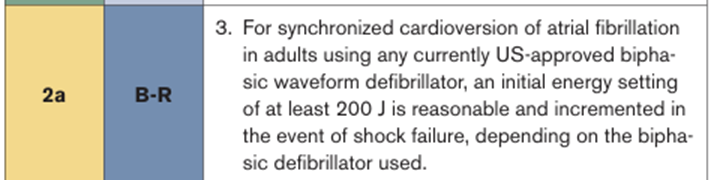
4. Synchronized cardioversion for a-fib and a-flutter is now recommended to start at 200 joules instead of 125. This is a 2a recommendation.
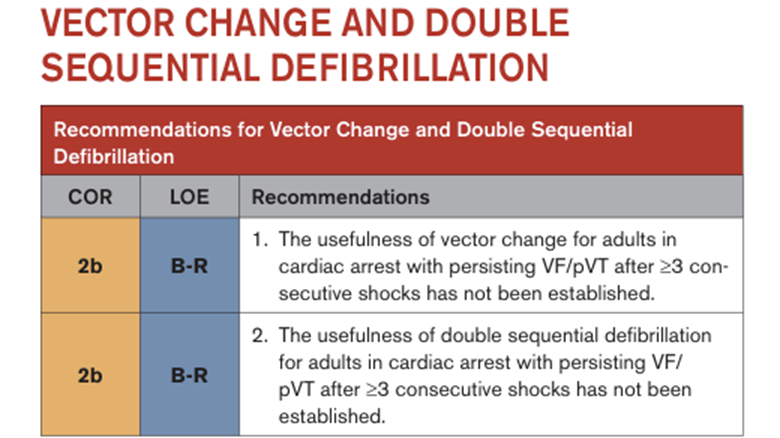
5. Not routinely recommending the advanced procedure of double sequential shocking refractory vfib.
6. Early administration for epinephrine PEA & asystole algorithm
- Remember my acronym; it’s PEA
P = Pump; start chest compressions
E = Early epinephrine
A = Assess the causes
7. Glucose control: Maintaining blood glucose levels between 144 – 180 mg/dL (8 – 10 mmol/L) is a key recommendation.
8. IV access is preferred over IO access, but IO is still acceptable.
9. TTM for a minimum of 36 hours in unresponsive patients.
10. Keep MAP > 65 post resuscitation and avoid hypotension. We know hypotension is bad!
11. Healthcare providers should use a checklist and have guidelines/algorithms at hand during resuscitation.
12. Early coronary angiography: Recommended for patients with suspected cardiac causes of arrest.
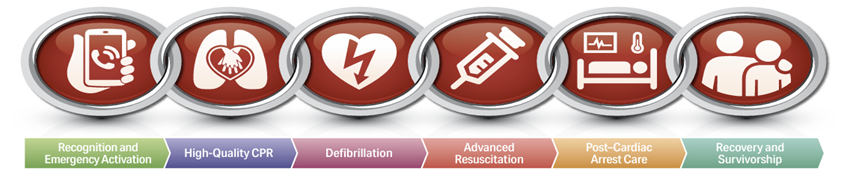
13. AHA is going back to the universal chain for CPR and ECC guidelines.
AHA 2025 CPR and ECC Guidelines References:
2025 American Heart Association Guidelines for Cardiopulmonary Resuscitation and Emergency Cardiovascular Care, Circulation; Volume 152, Issue 16
You can go see the changes directly here at the AHA website here. https://cpr.heart.org/en/resuscitation-science/cpr-and-ecc-guidelines/algorithms


 Nicole Johnson

Add comment