The Blog - Nicole Kupchik Consulting and Education

New Updates in Resuscitation

NEWS FLASH!  The American Heart Association has updated their AHA 2025 CPR and ECC Guidelines and I want to share the updates here. Big picture, most of their recommendations are the same, but I am calling attention to some of the changes here.

1. For BLS

  1. There is a focus on starting CPR if abnormal breathing is present and no pulse is present. Think gasping or agonal breathing.
  2. Give rescue breaths if abnormal breathing is present and pulse IS present. Give naloxone if suspected opioid overdose.

2. LVAD Algorithm

  1. States only to do CPR in a patient with an LVAD that does not have adequate perfusion.
  2. Adequate perfusion is
    1. Normal skin color and temperature
    2. Normal cap refill
    3. MAP > 50 mm Hg
    4. PEtCO2 > 20 mm Hg
  3. These patients may not have a palpable pulse. You can use a doppler or an arterial line if the noninvasive BP cuff isn’t picking anything up.

3. Foreign body obstruction

  1. The use of 5 back blows is the initial step before 5 abdominal thrusts.

What’s old is new again! A lot of you may know I choked and was literally saved by nurses in a class. I will tell you the back blows really helped dislodge the freaking bite of turkey sandwich obstructing my airway! Don’t eat dry bread!

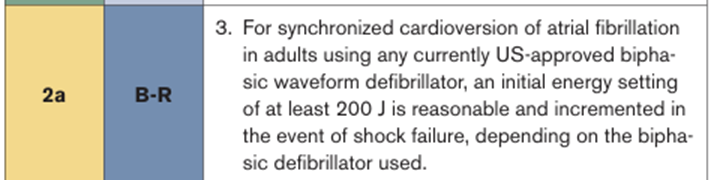
4. Synchronized cardioversion for a-fib and a-flutter is now recommended to start at 200 joules instead of 125.  This is a 2a recommendation.
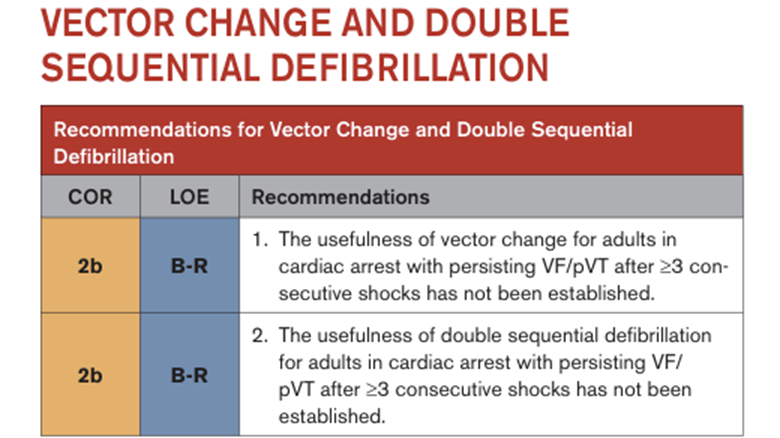
5. Not routinely recommending the advanced procedure of double sequential shocking refractory vfib.
6. Early administration for epinephrine PEA & asystole algorithm

  1. Remember my acronym; it’s PEA

P = Pump; start chest compressions

E = Early epinephrine

A = Assess the causes

7. Glucose control: Maintaining blood glucose levels between 144 – 180 mg/dL (8 – 10 mmol/L) is a key recommendation.

8. IV access is preferred over IO access, but IO is still acceptable.

9. TTM for a minimum of 36 hours in unresponsive patients.

10. Keep MAP > 65 post resuscitation and avoid hypotension.  We know hypotension is bad!

11. Healthcare providers should use a checklist and have guidelines/algorithms at hand during resuscitation.

12. Early coronary angiography: Recommended for patients with suspected cardiac causes of arrest.

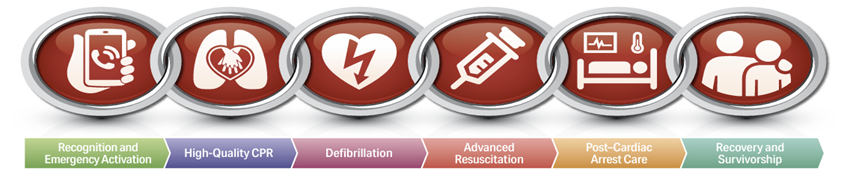
13. AHA is going back to the universal chain for CPR and ECC guidelines.
AHA 2025 CPR and ECC Guidelines References:

2025 American Heart Association Guidelines for Cardiopulmonary Resuscitation and Emergency Cardiovascular Care, Circulation; Volume 152, Issue 16

You can go see the changes directly here at the AHA website here. https://cpr.heart.org/en/resuscitation-science/cpr-and-ecc-guidelines/algorithms

Nicole Kupchik

MN, RN, CCNS, CCRN, PCCN and Critical Care Clinical Nurse Specialist

Nicole Kupchik has been a Critical Care RN for over 25 years. She graduated in 1993 from Purdue University with an Associate Degree in Nursing. In 2002 she received a Baccalaureate degree from the University of Washington, Bothell. In 2008 she received a Master's Degree in Nursing specializing as a Clinical Nurse Specialist from the University of Washington Seattle.

Nicole started her career at St. Mary Medical Center in Hobart, IN. From there, she traveled the U.S., working in large academic facilities such as State University of New York (SUNY) and the University of California at Los Angeles (UCLA). She also worked in Albuquerque, NM, Phoenix, AZ, San Francisco, CA and Palm Springs, CA before finally landing in Seattle at the University of Washington, where she worked in the Cardiothoracic ICU for 5 years.

In 2001, she switched gears and accepted a position at Harborview Medical Center in the Neuro-Surgical ICU and Cardiac ICU. In 2002, she was part of a team that was one of the first hospitals in the US to implement Therapeutic Hypothermia after Cardiac Arrest. Nicole wrote protocols and published numerous papers on the success of the therapy. For this she was honored with the Washington State March of Dimes, Nurse of the Year Award in Research & Innovation.

In 2007, she became a Critical Care Educator at Harborview Medical Center. The following year she accepted the role of Clinical Nurse Specialist for Cardiology, Critical Care and founded the Sepsis Program. Nicole made huge strides to implement programs and improve outcomes. Her innovative work with Harborview Medical Center's Sepsis Program was honored with 2 Washington State Qualis Awards for Patient Safety & Clinical Leadership.

Nicole finds her passion as a popular lecturer and arms nurses with tools to create safe work and practice environments. Her casual style sets the tone for a relaxed, fun & interactive learning environment. She especially enjoys teaching Cardiology & Critical Care topics. She believes every Critical Care & Progressive Care nurse should be certified in their specialty area.

Seattle, WA is home for Nicole. She lives there with her adorable Bernedoodle Finley. In her spare time she enjoys hiking, biking, traveling, spending time with her friends and being an active volunteer with the Junior League of Seattle.

Add comment

This site uses Akismet to reduce spam. Learn how your comment data is processed.

Follow us

Don't be shy, get in touch. We love meeting interesting people and making new friends.