

 Nicole Johnson
Cardiac tamponade is one of those things that can sneak up on nurses and cause a major problem.
What is cardiac tamponade?
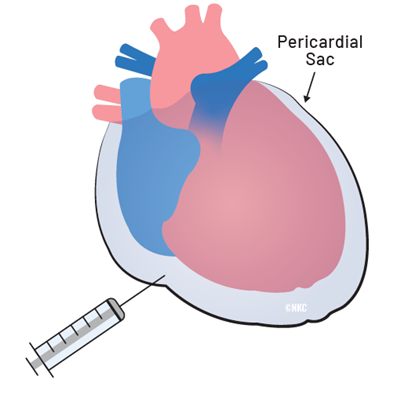
It’s blood or fluid that fills the pericardial sac around the heart. This can compress the heart and cause hemodynamic instability. Think decreased filling time and reduction in stroke volume. If you’ve seen it, you will never forget it because it is an emergency!
How do you know if your patient is experiencing tamponade?
Let’s remember Beck’s triad.
- Elevated CVP with JVD
- Hypotension (and narrowing of pulse pressure)
- Muffled heart sounds
Clinically, patients more at risk for tamponade are patients post cardiac surgery which makes sense. However, sometimes patients will spontaneously develop a pericardial effusion (fluid/blood) from renal failure or malignancy in the pericardial sac. So, always be on the lookout for Beck’s triad.
Other signs and symptoms could be:
- Shortness of breath
- Tachycardia
- Sudden drop in chest tube output
- Low QRS voltage on ECG
- Equalization of right & left cardiac pressures (CVP = PAOP)
- Pulsus paradoxus (>10 mm Hg drop in BP during inspiration)
- Cardiac arrest!
What should you anticipate as the bedside nurse?
This is an emergency! For urgent drainage expect:
- STAT chest x-ray, ECG, and bedside echo
If your patient IS experiencing a tamponade:
- Anticipate a percutaneous pericardiocentesis with echocardiography guidance.
- Your provider will place a needle into the pericardial sac and drain it.
- Monitor your patient for hemodynamic changes.
- Typically, the provider will leave a cardiac drain in until there is less than 25 mL/day of drainage.
If you are studying for the Cardiac Medicine subspecialty certification, Nicole Kupchik has the perfect study resources currently on sale until 6/18/25, HERE! Both the on-demand review course and study guide book discusses signs of cardiac tamponade & how to treat it!
Additionally, the Critical Care Survival Guide is full of wonderful cardiac information, perfect for any ICU nurse!
Knowledge of the signs of cardiac tamponade and having a treatment plan will prevent serious complications and save lives!



Add comment